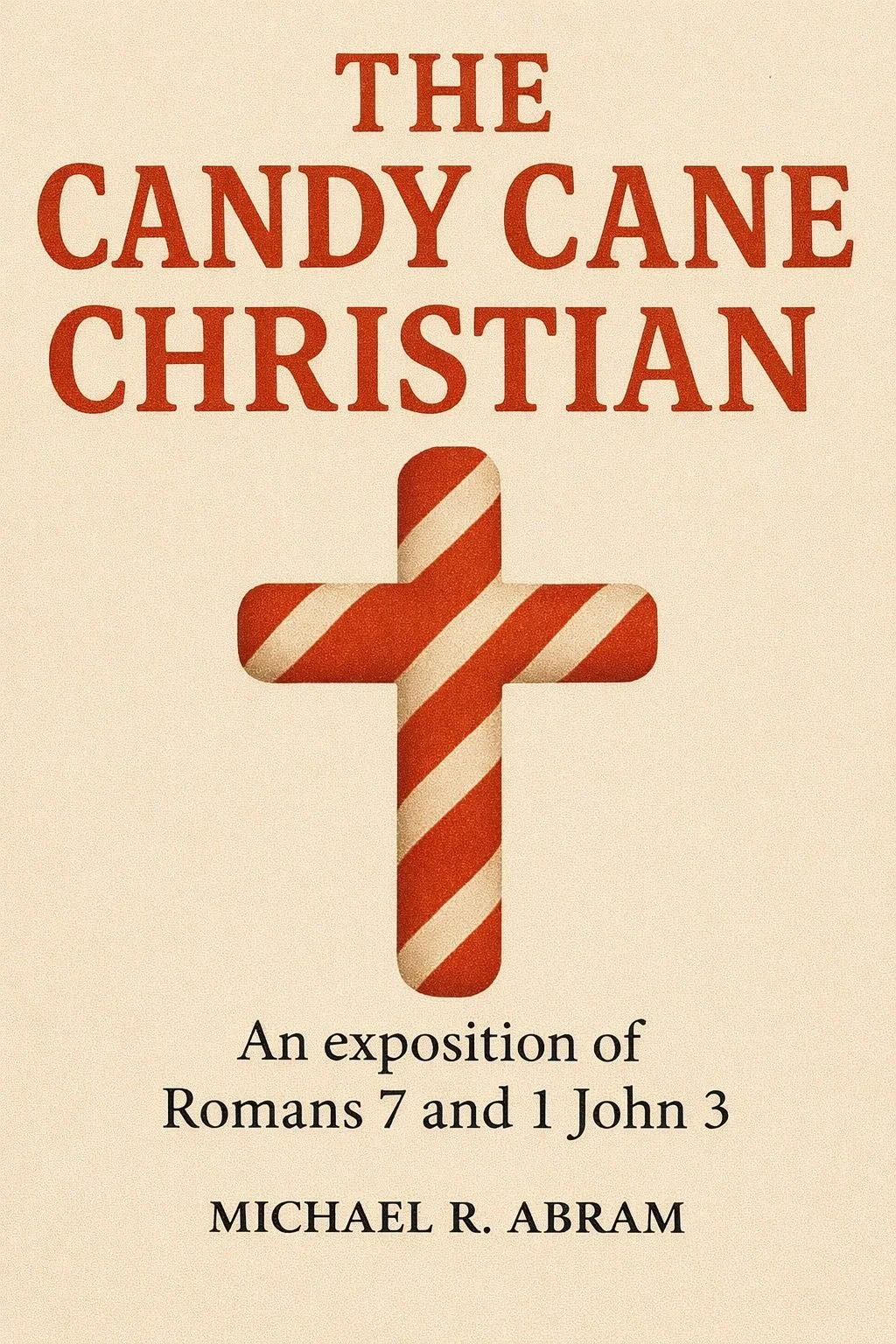
For nearly two thousand years, Christians have confessed something that seems impossible. We confess that we are both saint and sinner. Not a saint who occasionally sins. Not a sinner hoping one day to become a saint. But both, at the same time. Most of us spend our lives trying to escape that tension. We either deny the scarlet altogether, or we become convinced the scarlet is all there is.
The apostle Paul did neither. Instead, he opened a window into the Christian heart. In Romans 7, Paul describes a man who delights in the Law of God, longs to do what is right, and yet finds another law at work within him, waging war against his renewed mind. He is not describing life before Christ. He is describing the astonishing reality of life in Christ, a child of God who still bears the scarlet stain of sin.
The apostle John takes us deeper still. He refuses to let us pretend the scarlet isn't there. "If we say we have no sin, we deceive ourselves." Yet he also refuses to let us believe that scarlet is our identity. "See what kind of love the Father has given to us, that we should be called children of God; and so we are." John and Paul are not arguing with one another. They are describing the same Christian from two different angles.
This book is an invitation to recover that ancient confession. It is an invitation to stop pretending the scarlet isn't there, while refusing to believe that the scarlet is who we are. It is an invitation to discover that God has loved us from the beginning, that He continues to love us in the midst of our struggle, and that His love is slowly transforming us into people who love as we have been loved.
The candy cane has two colors. The scarlet is real. The white is real. The Christian lives with both until the day faith becomes sight. Until then, we remain, by the grace of God, both saint and sinner.